Toward 2028: Bringing Quantum Resistance and AI Security into Practical Use
Building on the continued operation of its independent blockchain, SORA will advance the implementation and evaluation of quantum-resistant technologies and the development of security for AI agents. With 2028 as the target year, we will develop usable functionality through phased implementation and testing.
Building on Existing Technology for the Next Stage of Practical Use
Starting with functions already introduced, including PQC and sora1, SORA will improve transaction verification, key management, and wallet operation. In parallel, we will investigate AI agent behavior and develop technologies to detect information access and actions beyond the scope of instructions.
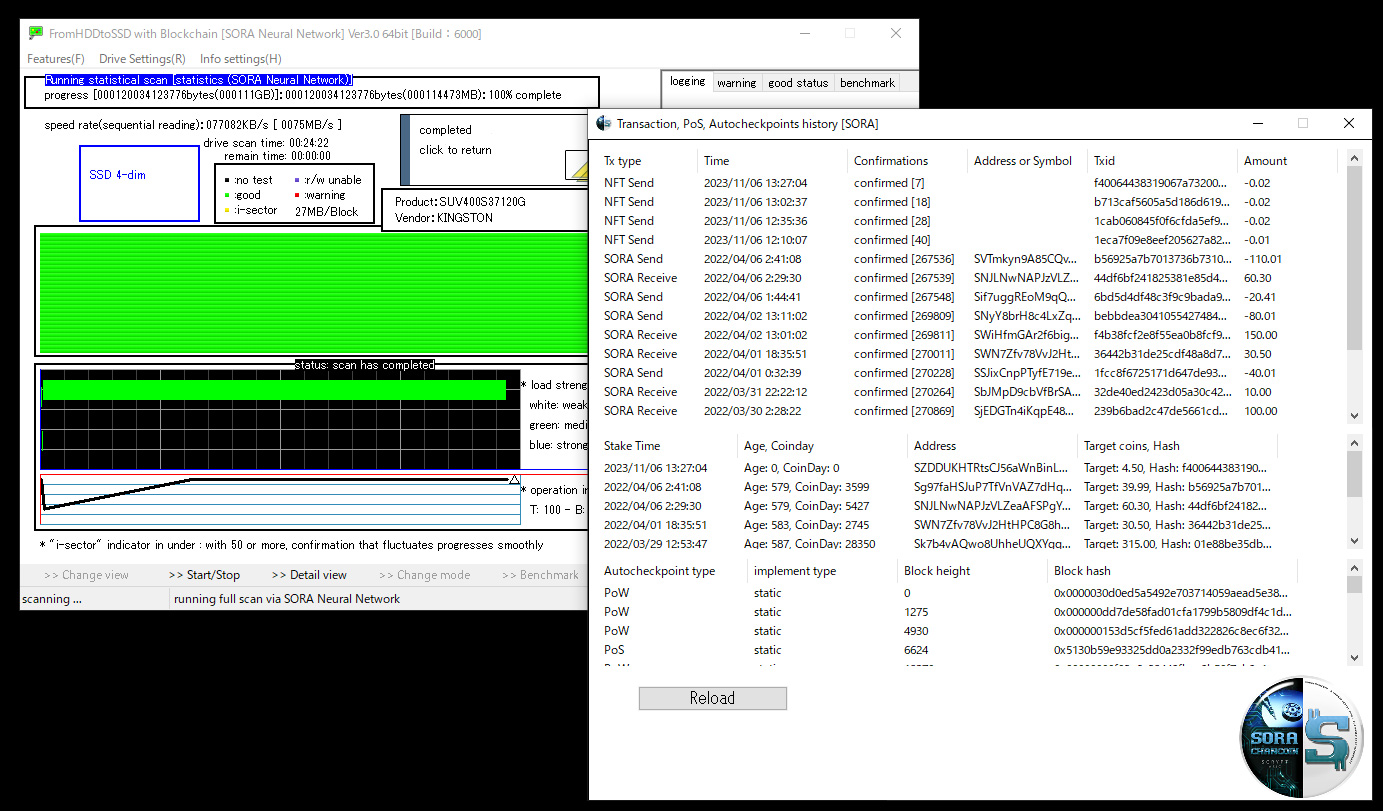
Our direction is to implement quantum resistance and AI security in stages, connecting the cryptographic and transaction foundation of L1 with the practical experience gained through FromHDDtoSSD v3 on L2.
Foundation Review and Design
Toward the end of 2026, we will review existing implementations and investigation findings, and define the specifications and evaluation criteria needed for the next stage of development.
Quantum Resistance
- Review the PQC and sora1 implementations and transaction verification conditions.
- Define evaluation requirements for key management, recovery, and coexistence with and migration from legacy formats.
- Clarify the respective roles of signature-processing efficiency and the mechanisms intended to provide quantum resistance.
AI Security
- Investigate how AI agents access information and perform operations.
- Define permission scopes for reading, writing, external transmission, and tool execution.
- Develop the basic design for monitoring, control, and history management.
Phase objective: Define development scope, specifications, and test conditions to establish a foundation for phased implementation.
Phased Implementation and Testing
We will expand quantum-resistant functionality and evaluate AI security prototypes under conditions close to real-world usage.
Quantum Resistance
- Improve PQC-enabled transaction and wallet functions.
- Advance migration to the sora1 format and evaluate key management and recovery procedures.
- Test rejection of invalid input, compatibility, and signing and verification performance.
AI Security
- Prototype functions that compare actual access and operations with the permitted scope.
- Connect detection of suspicious behavior with controls such as stopping or restricting operations.
- Evaluate history management that links instructions, permissions, and operation results.
Phase objective: Run prototypes and improved functions in test environments to assess detection effectiveness, misclassifications, and operational challenges.
Integration and Practical Deployment
Based on evaluation results, we aim to progressively deliver quantum-resistant and AI security functions in a usable form.
Quantum Resistance
- Gradually apply the evaluated functions to operational environments.
- Document and publish wallet and transaction usage procedures, supported functionality, and evaluation results.
- Continue improving key management and network operation after deployment.
AI Security
- Aim to deliver functions combining monitoring, permission controls, and history verification.
- Advance adoption and ongoing evaluation in practical environments, including L2.
- Share results with SS256 and broaden activities connecting AI and Web3.
Phase objective: Clarify the supported scope of the relevant functions and deliver them in a form that users can adopt and operate.
Target Outcomes toward 2028
| Area | Target Outcome |
|---|---|
| Quantum resistance | Expand and evaluate PQC-enabled functions and establish a usable environment for transactions, key management, and wallets. |
| AI security | Progressively implement functions that monitor AI operations, compare them with the permitted scope, and support detection and control of permission violations. |
| Blockchain integration | Define recordkeeping and verification mechanisms that help verify the provenance of processing histories and detect changes while protecting the necessary information. |
| Practical deployment | Use existing L1 and L2 environments to prepare and deliver the relevant software, usage procedures, and evaluation materials. |
Our Approach to Development and Delivery
Implementation, testing, and application to operational environments will proceed in stages, with clear descriptions of the functions provided and their evaluation results. Runtime access control for AI will be integrated with permission management in operating systems, applications, and tools. Blockchain is being considered as a mechanism supporting the verification of histories.
2028 is the target year for implementing the relevant functions and bringing them into practical use. Specific availability dates will be announced as technical evaluation and operational preparations progress. Research and improvements in quantum resistance and AI security will continue after deployment.